
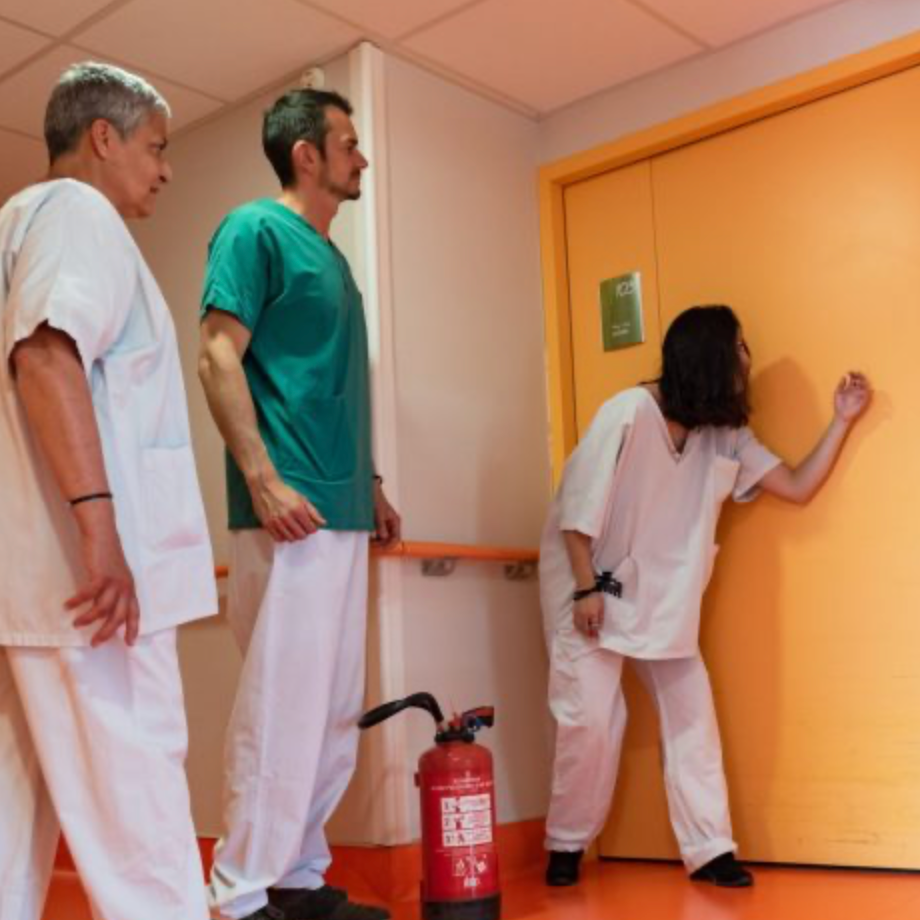
Fire safety in nursing homes: healthcare staff
€96.53
Tax included
This e-learning training allows healthcare staff in nursing homes to understand fire risks, adopt the right reflexes and act effectively in an emergency situation. In 45 minutes, you learn the essential principles of prevention, the role of each individual, the recognition of alarms, the mastery of the Fire Safety System (SSI), as well as evacuation procedures and the securing of residents, particularly persons with reduced mobility.
👉 Target audience: healthcare staff, nursing assistants, nurses, nursing home staff
👉 Duration : 45 minutes
👉 Objective: prevent risks and act effectively in case of fire
👉 Intended for: anyone working in a nursing home or in a facility accommodating dependent persons
Description
🔥 Understanding fire risks in nursing homes
Nursing homes continuously accommodate dependent elderly people, some with reduced mobility, and present high fire risks. This training explains the specific characteristics of type J facilities, the common causes of fire, the impact of residents’ fragility, as well as the regulatory requirements governing fire safety in this sector.
📌 What you will learn:
| Topic | Content |
|---|---|
| Specific characteristics of nursing homes | Vulnerable residents, reduced mobility, continuous staff presence |
| Causes of fire | Electrical equipment, rooms, technical areas, care areas |
| Possible consequences | Rapid spread, toxic smoke, evacuation difficulties |
🚨 Knowing and using the Fire Safety System (SSI)
Healthcare staff must be able to identify SSI signals, interpret alarms and carry out the first safety actions. The module presents all the detection, alert, extinguishing and compartmentation equipment present in nursing homes.
| Equipment | Role |
|---|---|
| Fire detectors | Early detection, immediate staff alert |
| Fire alarm | Sound signal broadcast, safety procedures |
| Extinguishers | Rapid control of an incipient fire |
| Compartmentation | Fire containment, slowing the spread |
🏥 Acting effectively in a fire situation
The training provides clear instructions to intervene quickly: raise the alarm, evacuate or confine depending on the situation, protect residents and participate in firefighting within the limits of healthcare staff capabilities.
📌 Essential actions:
- Raise the alarm immediately
- Secure the area and close doors
- Use extinguishers on a controllable fire outbreak
- Assist or evacuate residents according to procedures
- Participate in horizontal or vertical safety measures
🧓 Securing dependent residents
A large part of the training is dedicated to protecting and transferring dependent persons: assisted movement techniques, evacuation priorities, assembly points and coordination with the response team.
| Situation | Recommended actions |
|---|---|
| Bedridden resident | Horizontal transfer, respiratory protection, smoke vigilance |
| Reduced mobility | Assisted movement, wheelchairs, team coordination |
| Independent residents | Guidance to protected areas or safe exits |
❓ Frequently asked questions
Yes, the training has been designed for care teams, service staff and anyone working in contact with residents.
You immediately receive an email containing all the necessary information to access your training space. You can start learning without delay.
You benefit from access for 12 months, allowing you to follow the modules at your own pace.
A certificate of completion is issued once the course is completed.
Yes, the training is accessible on computer, tablet and smartphone, via all recent browsers.
Product Details
FL-SI-00-NT-NM-B
Specific References
Reviews
No customer reviews for the moment.